
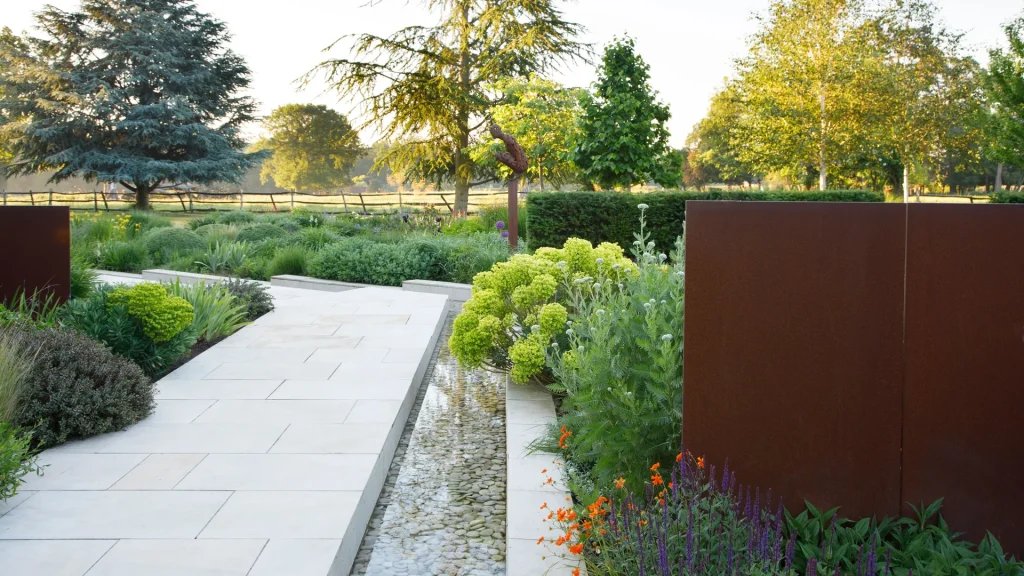
Outdoor privacy works best when it isn’t dependent on one oversized fence. Layering plants, screens, and structures can block important sightlines while keeping a backyard open, attractive, and comfortable.
The goal isn’t always complete isolation. In many yards, covering a neighboring window, patio, or upper-story view is enough to make the space feel substantially more private.
Identify the Sightlines That Matter Most
Sit in the places where you normally relax and look toward neighboring properties. Privacy problems often come from one or two specific angles rather than the entire boundary.
Mark those lines before buying plants or panels. A narrow screen positioned close to a patio may solve a problem that would otherwise require many feet of new fencing.
Consider Views From Above
Standard fences may not block second-story windows or elevated decks. In those situations, taller planting, pergola beams, overhead fabric, or a carefully positioned small tree can address the higher viewing angle.
Build Privacy in More Than One Layer
Start with a boundary layer, then add screening closer to important activity zones. A fence could provide the background while shrubs soften it and a smaller decorative panel protects a dining table.
If your yard also includes recreational areas, references around poolside landscaping can help illustrate why privacy is often more effective when planned around individual outdoor zones rather than only the lot perimeter.
Use Structures to Create Outdoor Rooms
Pergolas, trellises, freestanding walls, and covered seating structures can create privacy without requiring a continuous tall barrier. They are especially helpful near patios where plants alone would consume too much floor space.
Design inspiration associated with relaxed lodge living can be useful when looking for ways to combine structural shelter with warmer natural materials.
| Privacy Layer | Main Job | Potential Drawback |
|---|---|---|
| Boundary fence | Blocks lower views | Can feel flat alone |
| Shrubs | Softens and fills gaps | Needs growing space |
| Trellis | Adds targeted height | May need climbing plants |
| Pergola | Screens elevated views | Larger construction project |
Let Plants Do the Softening
Evergreen shrubs can maintain coverage throughout the year, while ornamental grasses and deciduous plants can add seasonal movement. Mixing plant heights often looks more natural than planting a single continuous row.
When privacy changes are part of broader home-and-yard planning, think about drainage, maintenance access, mature plant width, and how new structures will affect neighboring areas.
Avoid placing fast-growing plants too close to paving or structures simply because they provide quick screening. Mature size matters more than nursery size.
What People Often Get Wrong About Privacy
Total visual blockage can sometimes make a yard feel smaller rather than more comfortable. Tall solid fencing on every side may reduce views, airflow, and daylight unnecessarily.
Privacy also changes with position. A screen that works perfectly when people are seated might not hide the same view when someone is standing near an outdoor kitchen. Test several eye levels and locations before committing to permanent construction.
Frequently Asked Questions
What is the fastest way to create backyard privacy?
Freestanding screens, trellises, outdoor curtains, and large planted containers can provide immediate targeted coverage while slower-growing shrubs or trees become established.
What plants are best for privacy screening?
The best choices depend on climate, sunlight, soil, and available width. Dense evergreen shrubs are popular for year-round coverage, but their mature size should fit the space.
How can I block a neighbor’s upstairs window?
Use taller targeted elements such as narrow trees, pergola beams, overhead panels, trellises, or strategically positioned screens rather than simply increasing the height of every boundary fence.
Design Privacy Around Real Use
Focus first on the views that actually make the yard uncomfortable. Then combine a permanent background layer with softer planting and targeted structures near patios, pools, or dining areas. This approach usually feels more natural than one continuous barrier and gives you greater control over light, airflow, maintenance, and the sense of space.